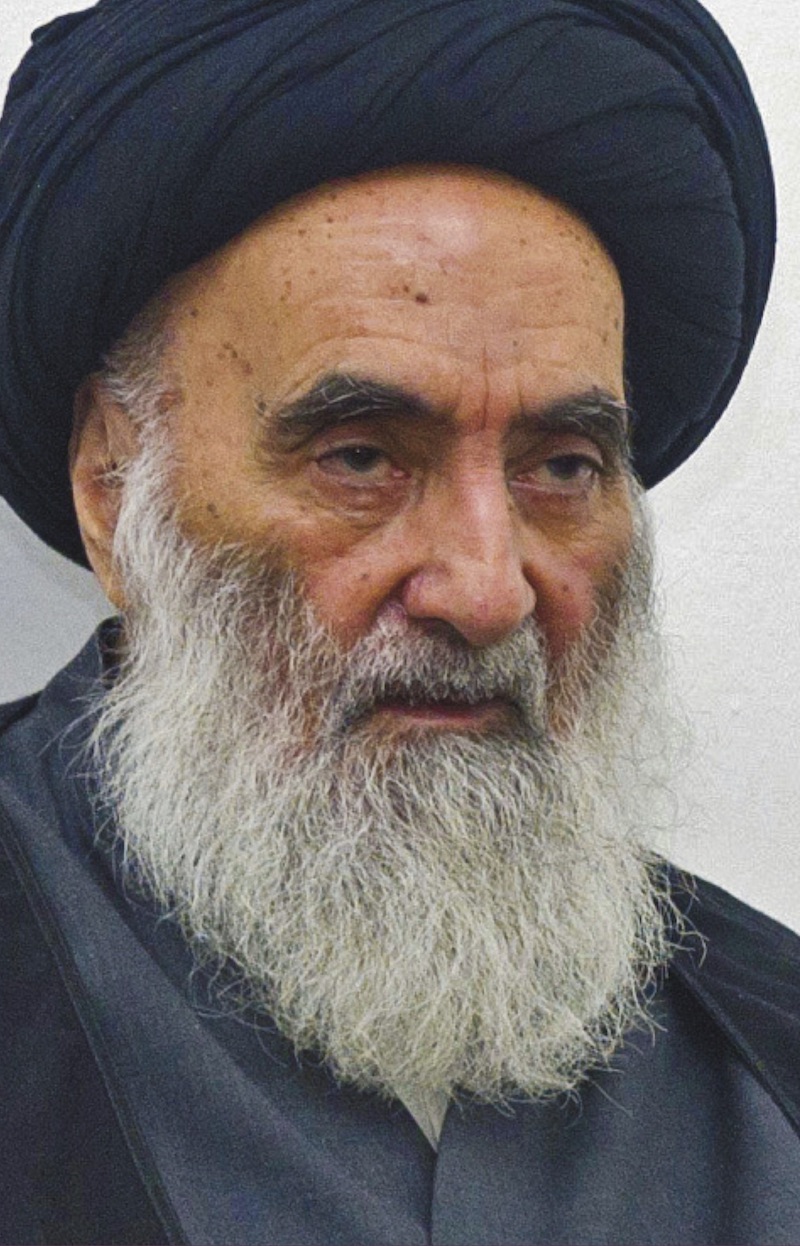
Grand Ayatollah Sayyid Ali Hussein Al-Sistani is the leading cleric and spiritual authority for Twelver (Ithna ‘Ashari) Shia Muslims globally, widely respected for his religious scholarship, moral integrity, and role as a quiet but powerful voice in social, political, and humanitarian matters. He heads the Hawza Al-Ilmiyya in Najaf, Iraq, which remains one of the foremost centres of Shia learning.
Preeminent Shia Cleric: He comes from a family of distinguished scholars and began his religious studies in Mashhad before moving to Qom. There, he studied under leading clerics, but his formative years were spent in Najaf, Iraq, under the guidance of Grand Ayatollah Abu al-Qasim Al-Khoei. Following Al-Khoei’s death in 1992, Sistani inherited his mantle of authority, rising to become the leading Shia cleric in Najaf and the most influential marjaʿ globally.
Marja Al-Taqlid: Sistani’s authority as marjaʿ al-taqlid places him at the apex of Shia religious leadership. His followers—estimated at over 20 million across Iraq, Iran, Lebanon, South Asia, and the wider diaspora—look to him for rulings on matters of jurisprudence, ethics, and faith. He oversees a network of more than 2,000 religious schools, with Najaf as the epicentre of Shia learning. Through his role, Sistani has positioned Najaf as a counterbalance to Qom, emphasizing a quietist model of clerical authority.
Financial Influence: Sistani also has very significant financial clout. As a marja his followers give him a religious tax (khums, Arabic for one-fifth). The redistribution of this tax for the common good is one of the key roles of a marja. Much of this remittance is redistributed through the Al-Khoei Foundation—the largest Twelver Shia development organisation in the world that maintains a network of educational and humanitarian establishments for both Shia and non-Shia Muslims. In 2022 it spent over $100 million.
Quietest Influence: Significantly, Sistani is against the idea of Velayat-e Faqih, suggesting Shia clerics should not get involved in politics. Paradoxically, this approach has afforded him very strong influence as a religious leader unsullied by politics. Sistani has used his position of quietist authority to wield influence also as a peacemaker in turbulent, post-invasion Iraq. His comments about the political scene have been credited with bringing about stability at key moments. He has identified eliminating political corruption and improving public services as the main issues of the day. He has also issued strong statements against DA’ISH, calling on Iraqis to unite against the militants.
Protecting Minorities: Grand Ayatollah Al-Sistani has played a significant role in Iraq’s post-Saddam Hussein era, advocating for democracy and the protection of the rights of religious and ethnic minorities. His guidance has been instrumental in shaping the country’s political landscape and promoting peaceful coexistence among its diverse population.
Meetings: Sistani rarely meets officials but made an exception for Iran’s former President Rouhani and Foreign Minister Mohammed Javad Zarif in March 2019. Pope Francis also visited Sistani’s home in Najaf in March 2021 during the Pope’s visit to Iraq.
The Gaza Genocide: Al-Sistani has specifically addressed the Muslim world, calling for unified efforts to stop the Israeli genocide in Gaza and to provide greater support to Palestinians. The cleric has criticised the lack of international accountability for Israel’s crimes and blamed certain world powers for this failure.