

Al-Ghazali’s Kitab al-tawba, The Book of Repentance, Volume 31 from the Fons Vitae Series, ‘The Revival of the Religious Sciences’
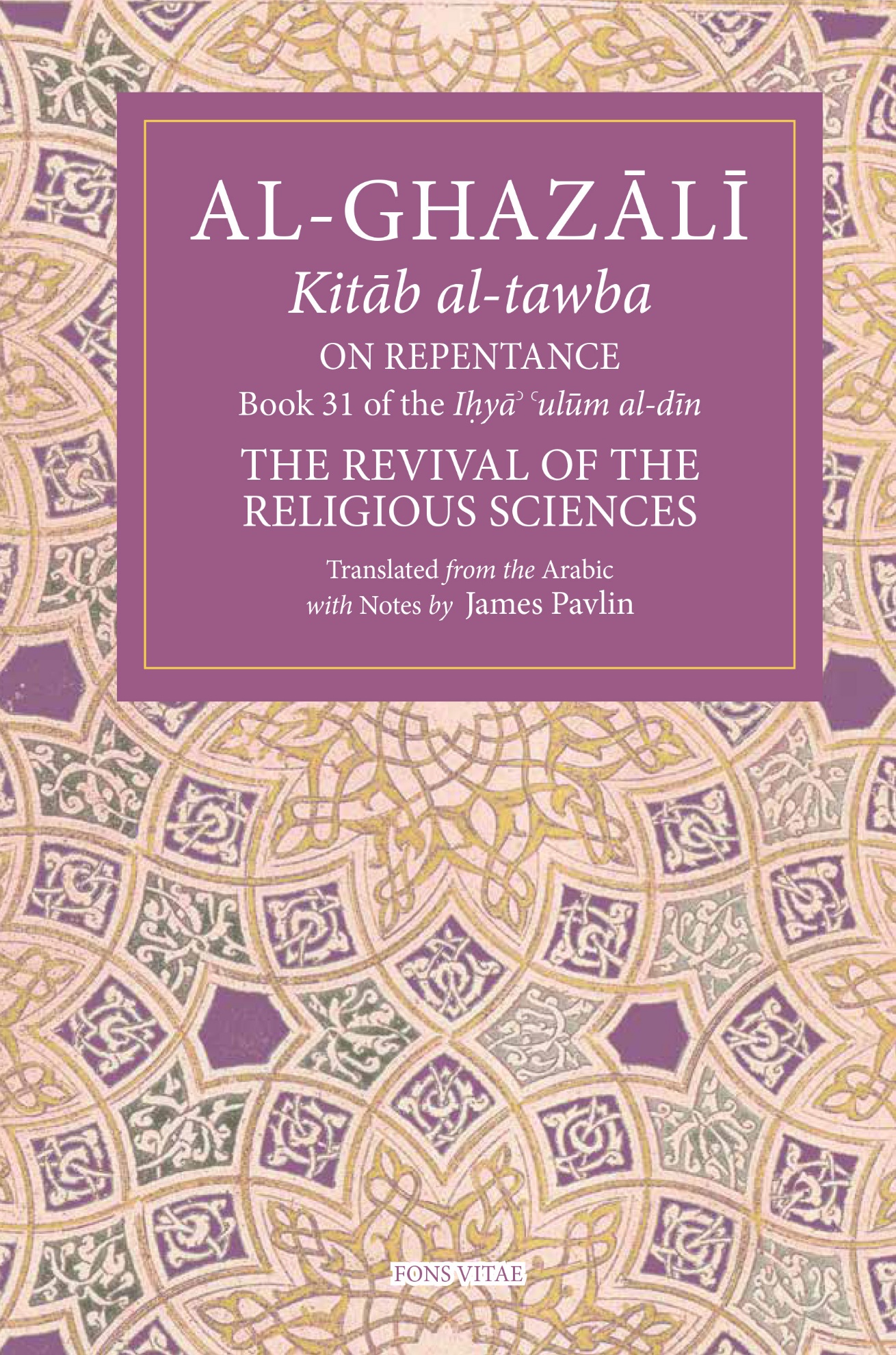
Author: Abū Hāmid al-Ghazālī
Translator: James Pavlin
ISBN #: 979-8-89640-017-2
Publisher: Fons Vitae (available from Fonsvitae.com)
In his 40-volume magnum opus, the ‘Revival of the Religious Sciences’, Ghazali devotes the first quarter to ‘Worship’, the second to ‘Customs’, and the third to ‘Perils’. He opens the final quarter, ‘Deliverance’, with the subject of Repentance (tawba), or turning around, which is the universal entry point and basis for any spiritual journey. This is both a foundational text and a mirror for the wayfarer. People already take continuous account of themselves with the passing thought, “If only I had…!”. Ghazali counsels, “We should interrogate ourselves before being interrogated. If a person does not hold himself accountable in this world, his accountability in the hereafter will be lengthy.” One should not be deceived by the ephemera of this world.
Al-Ghazali builds this pivotal volume on four pillars: the essence of repentance; that which requires it with a division of major and minor sins explained in detail; the conditions for accomplishing repentance; and the remedy for those who consciously persist in transgressions – including the reasons they continue to do so. Small habitual sins, he warns, weigh upon the Heart; he offers concrete ways to alter our natural disposition for delay. Like poison, sin must be gotten out at once. The accrual of even small good deeds is of significant consequence. He poses the question that unsettles every reader: if you had one hour remaining, what would you do? For the serious seeker of today, this classic work provides a structure which supports and encourages self-assessment, making this a valuable practical guide.
Newly translated and annotated by James Pavlin from the Dār al-Minhāj Arabic edition, this is the first book of the Quarter of Deliverance rendered into clear English, its notes drawing on the classic commentary of al-Zabīdī.
The Harmonious Unity: Liu Zhi’s Sino-Islamic Interpretation of the Five-Fold Path

Author: Liu Zhi
Translator: Naoki Yamamoto
ISBN #: 979-8-89640-013-4
Publisher: Fons Vitae (available from Fonsvitae.com)
This is an English translation of Liu Zhi’s The Exposition of the Five Pillars of Islam, which remains the most influential Chinese-language Islamic work, regarded by Chinese Muslims (Islam arrived in China as early as 618 CE) as a fundamental textbook for learning and comprehending the divinely ordained duties of Islam. Liu Zhi (1660-1739) was a prominent Chinese Sunni Hanafi-Maturidi scholar of the Qing dynasty and a leading figure in the Han Kitab tradition.
“The Exposition of the Five Pillars of Islam” (Wugong Shiyi) by Liu Zhi is a profound treatise on the meaning of the Five Pillars of Islam (Shahada, Salah, Sawm, Zakat, and Hajj), framed within a metaphysical structure that draws on the language and lens of Chinese civilization and philosophy. The work provides both a theological and spiritual explanation of the Five Pillars as well as a moral framework that connects them to broader philosophical ideas about the nature of existence, ethics, and personal cultivation.
Besides its innate metaphysical and philosophical value, the text is invaluable for understanding how the masters of Chinese Islam straddled religious and civilizational frontiers and created harmony between two different intellectual worlds. Liu Zhi’s approach, however, is distinguished from that of other Muslim scholars in that he addressed the basic articles of Islamic thought with Neo-Confucian terminology and categories. The lens of Chinese civilization includes concepts derived from Taoism, Confucianism & Buddhism.
Professor Wang Genming explains in the Foreword that: “Although the Five Pillars are the foundational rites of Muslim life, the author approaches them not merely as ritual obligations, but as a profound gateway into the doctrines and spiritual philosophy of Islam. Through multi-faceted analyses of their origin, function, requirements, and religious significance, Liu Zhi offers a deep and nuanced exposition of Islamic teachings. The result is a text of exceptional conciseness and philosophical depth, where each line offers clarity at a glance and insight upon reflection.”
Many editions have been produced over the centuries, including a wood block edition in 1768. To have such a work giving insights into the way Islam was presented and understood in China is extremely valuable. It opens up a profound, refreshing and exciting approach to thinking about the 5 pillars of Islam whose deeper meanings some Muslims might take for granted.
The Exemplary Life of
Emir Abd al-Qadir al Jazairy
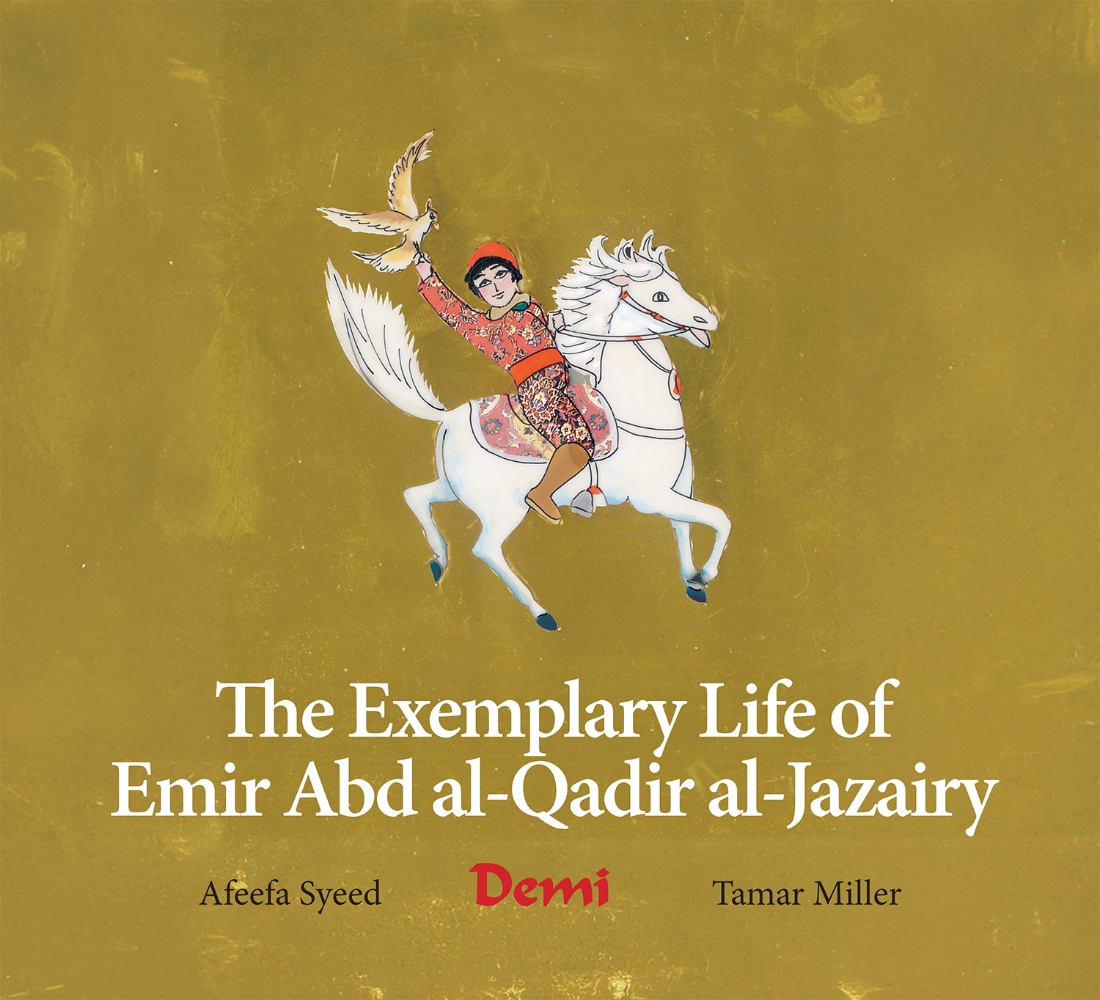
Authors: Afeefa Syeed, Tamar Miller
Illustrator: Demi
ISBN #: 979-8-89640-005-9
Publisher: Fons Vitae (available from Fonsvitae.com)
Children, their parents, and teachers will be captivated by the inspiring life story of one of the world’s noblest and most exemplary leaders. In this book for children, Emir Abd al-Qadir describes his own childhood and education, growing up in the Algerian Sahara. When, later, the French army invades his country, the people chose him to defend their lands and lives. His enormous restraint on the battlefield, his courage, integrity, selflessness and compassion – which even extended to the enemy – serves us as a beautiful reminder: even under extraordinarily dreadful circumstances, such as war, it is possible to live up to the highest standards of human dignity, respect for others and innate goodness. After signing a truce to relieve his people’s suffering, the Emir was exiled by the French to Syria where his inner spiritual and saintly life was nourished. Later, in Damascus, when a terrible riot broke out, this revered Muslim figure took Christian and Jewish families, as well as the French, into his own home to protect them.
Many films and books have been made on Emir Abd al-Qadir’s exemplary life; he became internationally recognized in his lifetime. This is a story which clearly illustrates the kind of a person we should all strive to become, strikingly enhanced by the exquisite illustrations of the renowned artist Demi.
The life story of Emir Abd al-Qadir is a deeply inspiring story of a man who strove to live and act with courage, integrity, compassion, selflessness, and devotion to God, even when to do so was extraordinarily difficult. The Emir’s life serves as a beautiful example for anyone, child or adult, religious or non-religious, of how it is possible for us to live up to the highest standards of goodness and integrity, regardless of our circumstances. The Emir is recognized not only in the Muslim world but internationally as an exemplary leader.
Under Fire: My Family’s Escape from Gaza and The Cost of Leadership

Author: Humza Yousaf
Publisher: The Bridge Street Press (an imprint of Little, Brown Book Group)
Publication Date: 1 October 2026
ISBN: 9780349136875
Under Fire by Humza Yousaf recounts the harrowing month-long ordeal of trying to evacuate his in-laws from Gaza following the October 7 attacks while managing his responsibilities as Scotland’s First Minister. The memoir reflects on personal loyalties, public duty, the rise of far-right populism, and his journey as the first Muslim leader of a Western European country.
When Scotland’s First Minister, Humza Yousaf, got a call from Gaza on the morning of 7 October 2023, he feared the worst. His wife’s parents, Elizabeth and Maged, had been visiting the Palestinian territory to see Maged’s sick Palestinian mother. Now, after the Hamas attack, they were caught in Israel’s furious onslaught.
Under Fire tells the story of Yousaf’s month-long nightmare as he tried desperately to get his in-laws out of Gaza and back home to Dundee. With the British government ignoring his pleas for help, he had to coordinate with other countries to get Elizabeth and Maged across the Rafah border into Egypt. While supporting his wife and children as they waited for daily updates from Elizabeth on her battle for survival, Yousaf also had to lead the whole of Scotland – as well as reassure the nation’s traumatised Jewish community. All while responding to online attacks.
As well as documenting his in-laws’ escape from Gaza, Under Fire also tells the story of how a son of immigrants grew up to become the first Muslim leader of a Western European country. Yousaf also tells of his fears on the rise of far-right populism and how to combat the forces that seek to divide us. The book draws back the curtain to give an honest account of how true leadership means reconciling personal loyalties with public duty, and how, in a world riven with conflict, it is more important than ever that leaders under pressure maintain their humanity and empathy for all.
Islamica Magazine
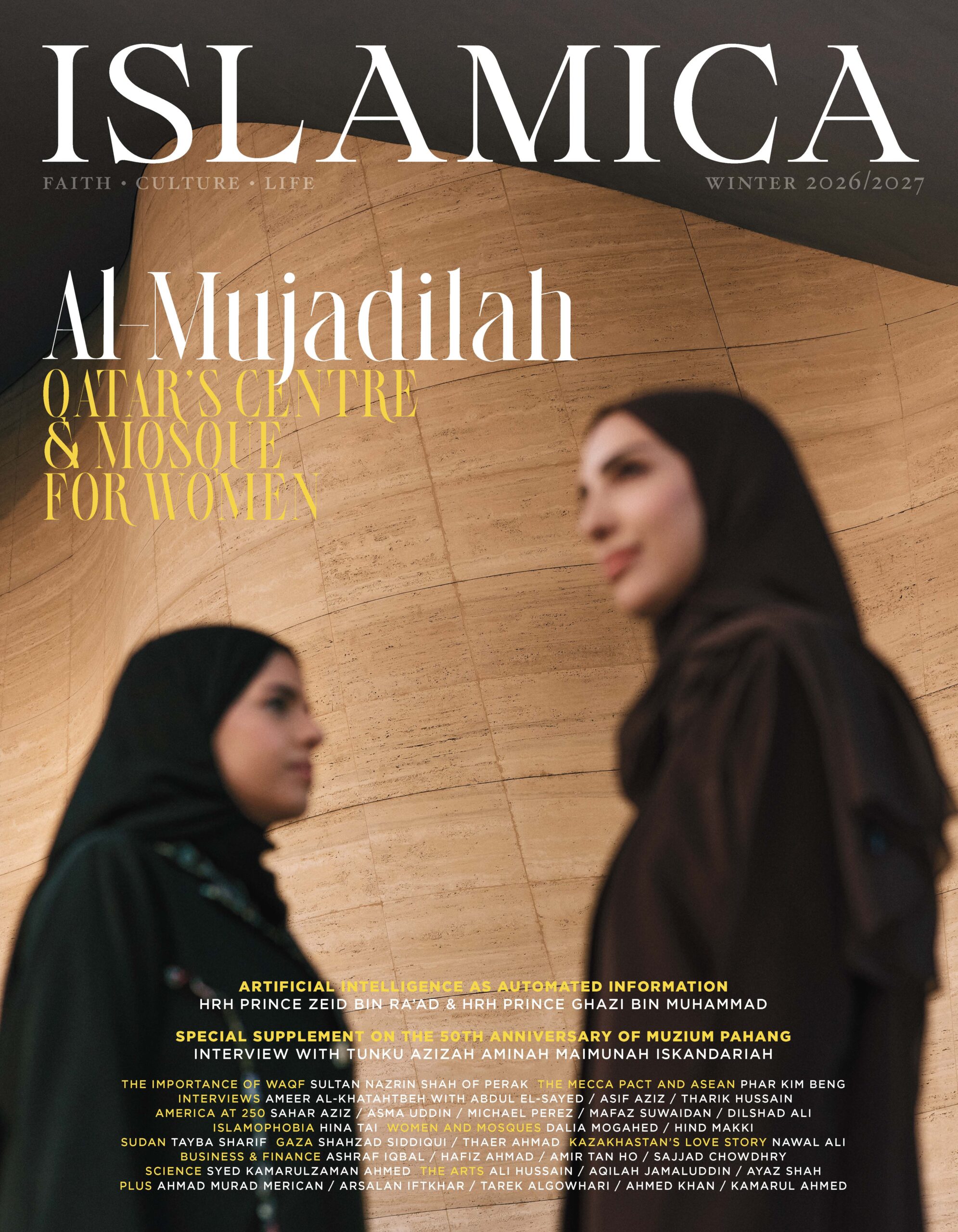
Editor-in-Chief: Sohail Nakhooda
Publisher: Sirius International Media Limited
Publication Date: August 2026 (Quarterly)
Website: www.IslamicaMedia.com
Following a 16-year hiatus, the return of ISLAMICA Magazine offers a refreshing and intellectually rigorous addition to the contemporary Muslim media landscape. Originally established in 1992 as a prominent voice for Muslim thinkers, the publication re-emerges into a deeply polarized media environment with a renewed commitment to objective journalism, spirituality, and culture. Transitioning into a substantial, beautifully produced quarterly print format of approximately 250 to 300 pages per issue, the relaunch edition establishes its presence through substantive, multi-disciplinary essays that bridge traditional thought with urgent modern dilemmas.
A significant portion of this issue handles the ethical and philosophical implications of emerging technology. In "Magnifica Veritas," HRH Prince Zeid bin Ra’ad and HRH Prince Ghazi bin Muhammad critically evaluate a recent papal encyclical on artificial intelligence, offering a compelling argument to reframe the technology as "Automated Information." This technological focus is balanced by contributions from H.E. Anwar Ibrahim on human-machine civilization, and Osman Bakar on the preservation of creative thinking.
The issue also provides serious, grounded analysis on pressing geopolitical crises. Features on Gaza by scholars like Hatem Bazian, H.A. Hellyer, and Mustafa Abu Sway examine selective justice and the threats facing historic holy sites, moving past superficial news cycles to examine systemic realities. Meanwhile, the arts and humanities sections offer cultural depth, featuring Itrisyia Dayini’s retrospective on the resistance art of Palestinian painter Sliman Mansour, an interview with Maryum Ali, and Michelle R. Kimball’s exploration of Rumi’s enduring spiritual legacy.
By balancing macroeconomic analyses of the global halal marketplace with deep dives into literature, history, and theology, ISLAMICA avoids the trap of ideological reductionism. It stands out as a sophisticated, essential quarterly text for readers seeking nuanced, intellectually demanding perspectives on how Islamic thought intersects with global current affairs.
ISLAMICA will be published quarterly; to discover more about the latest print and digital editions, see: www.IslamicaMedia.com.
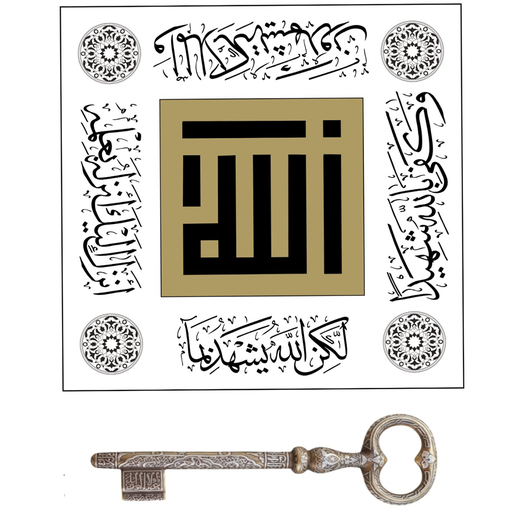
Keys To Paradise (app)
Publisher: The Prince Ghazi Trust for Quranic Thought
Publication Date: 1 October 2026
An Islamic Guide to Self-Examination and Spiritual Improvement
Inspired by the teachings of Imam al-Ghazali and the Islamic tradition of purifying the soul (tazkiyat al-nafs), Keys to Paradise is a mobile application designed to help Muslims recognise their shortcomings and work towards overcoming them.
The app addresses spiritual and moral failings such as pride, envy, anger, backbiting and other sins of the heart, tongue and senses. Drawing on the Qur’an, Hadith and classical Islamic teachings, it combines religious guidance with practical exercises to encourage self-discipline and better conduct.
Users can begin with a self-assessment to identify areas requiring attention or choose particular faults they wish to address. The app provides 31 lessons, short-term challenges, longer-term goals of up to 40 days, and a private journal in which users can record their efforts and progress.
Available in English, Arabic and French, Keys to Paradise works entirely offline, requires no account, and keeps all personal information on the user’s device.
The aim is simple: to help Muslims put into practice the Islamic teachings on self-examination, repentance and the cultivation of good character.