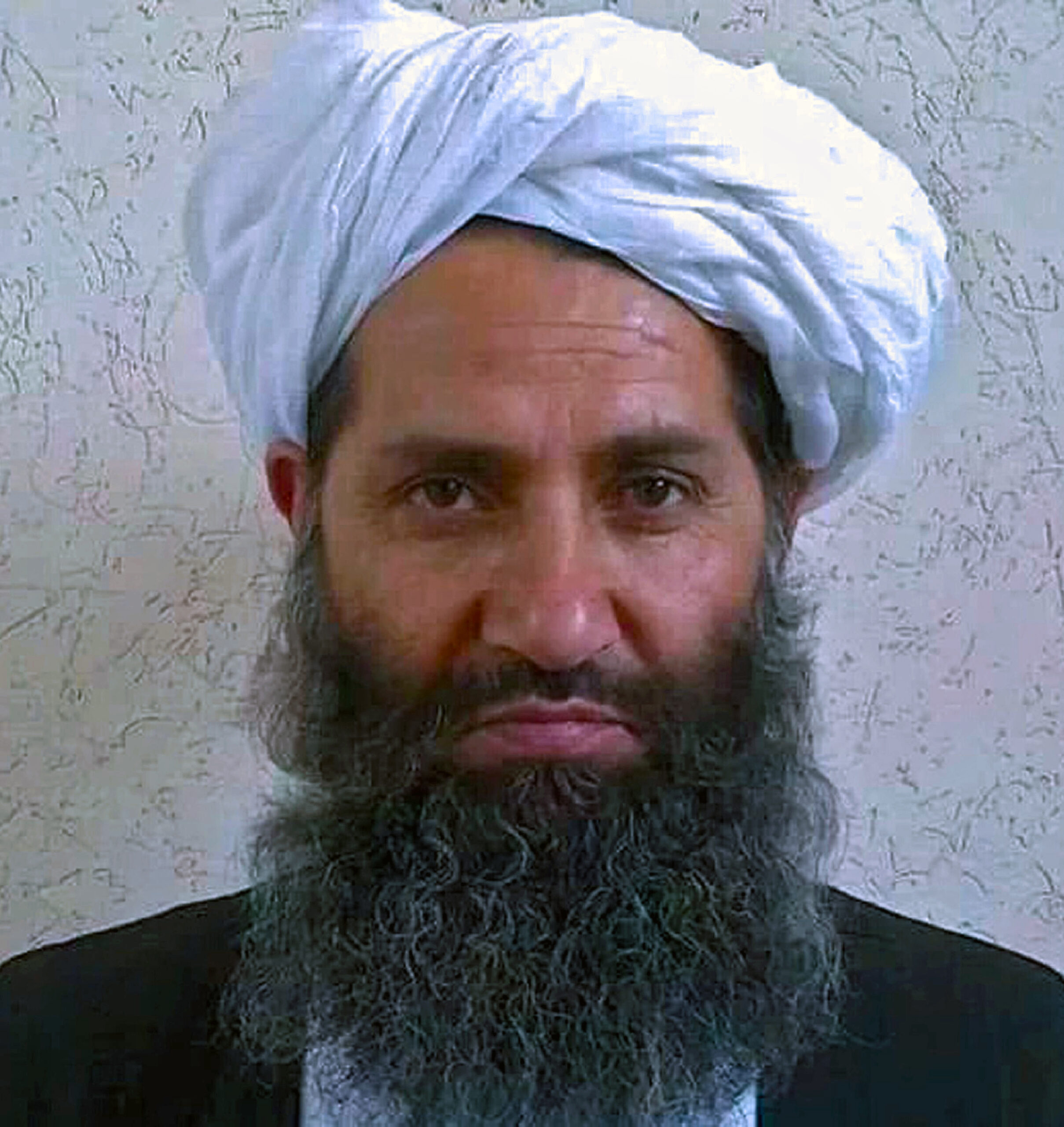
Mullah Haibatullah Akhundzada was named the supreme commander of the Taliban in May 2016 following the assassination of his predecessor, Mullah Akhtar Mohammad Mansour, in a US drone strike. Known as a reclusive religious legal scholar, he continues to govern the country with absolute authority, rarely making public appearances.
Mujahideen and De Facto Judiciary: During the 1980s Soviet-Afghan War, Akhundzada participated in the resistance forces, primarily serving as a religious counselor. He rose through the ranks and was appointed head of the military courts in Farah province, and later served as deputy head of the Supreme Court under the first Taliban regime. After the 2001 US-led invasion, he led the group’s shadow justice system in exile from Quetta, Pakistan.
State Consolidation & Socio-Economic Realities: Since the Taliban regained control of Afghanistan in August 2021, Akhundzada has consolidated absolute executive and religious power over the state. His governance has reduced domestic corruption, repaired vital economic infrastructure, and slashed regional opium production. The rapid return of approximately 3.7 million Afghan refugees has outpaced economic expansion, contributing to a 5.6 percent decline in GDP per capita, while inflation is 7.6 percent. Concurrently, his administration maintains sweeping totalitarian restrictions on human rights, including absolute bans on secondary and university education for women.
International Diplomacy: Russia became the first country to formally recognize the Taliban government in July 2025. While Western nations maintain strict banking sanctions and asset freezes, various other regional governments continue to expand direct diplomatic engagement and trade relations with Kabul without granting formal political recognition.