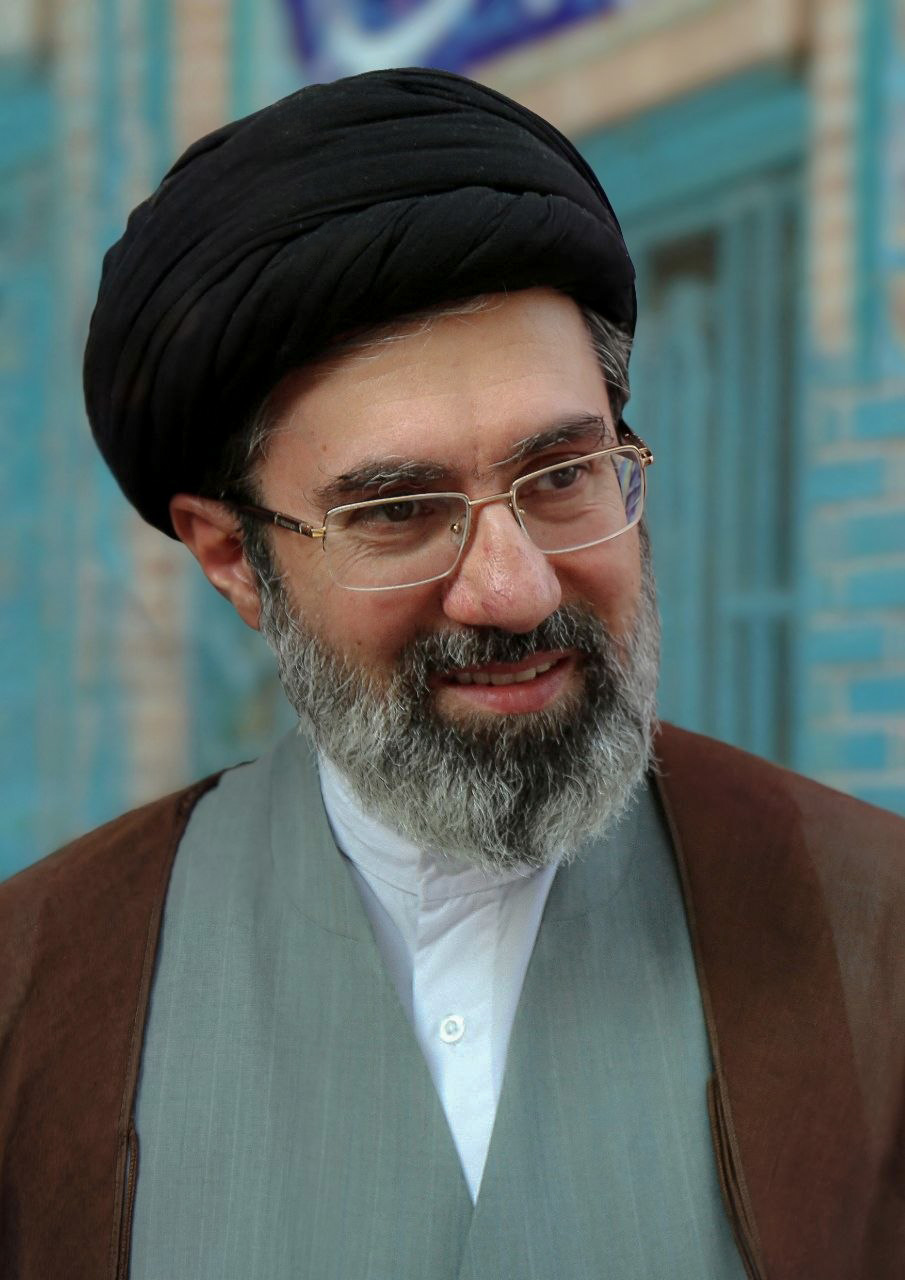
Ayatollah Sayyid Mojtaba Khamenei assumed absolute constitutional authority as the third Supreme Leader of the Islamic Republic of Iran on 8 March 2026, succeeding his father, Grand Ayatollah Ali Khamenei, who had ruled the nation for nearly four decades.
Tragic Succession: On 28 Feb, 2026, a joint USA–Israeli assassination of his father, Grand Ayatollah Ali Khamenei, completely destroyed the family’s primary residence and claimed the lives of several immediate family members, including Mojtaba’s wife, Zahra Haddad-Adel, and his teenage son, Mohammad Bagher. Mojtaba Khamenei narrowly survived the targeted strike. The Assembly of Experts officially elected him to office on 8 March 2026.
Supreme Leader, Velayat-e Faqih, and Historical Foundations: Khamenei’s influence stems from his position as a religious leader, which gives him a unique and absolute role in political affairs. His constitutional mandate is to enact the Velayat-e Faqih—the guardianship of the jurist. In real terms, this translates into a political and administrative system where scholars of fiqh (Islamic jurisprudence) hold a controlling, non-negotiable say in the legislative, judicial, and executive affairs of the state.
The rule of the jurist was a concept systematically codified by the revolutionary founder, Ayatollah Ruhollah Khomeini, but its core tenets draw upon deep ideas that have run through Iranian political history since the time of Shah Ismail. In the early 16th century, under the rule of the Safavid Dynasty, Shah Ismail made Shia Islam the national religion of Iran, structurally intertwining temporal monarchical rule with the religious authority of the Shia clergy (ulama).
Decades of Inward Influence and Technical Training: Long before his public ascension, Ayatollah Mojtaba Khamenei spent more than two decades operating as one of the most powerful behind-the-scenes figures within the Iranian state. Born in Mashhad, he was raised in an environment of intense political struggle and clerical scholarship. In his youth, during the devastating Iran–Iraq War, he volunteered for military service, joining the front lines as a combatant within the Islamic Revolutionary Guard Corps (IRGC) Habib Battalion. This early experience forged lifelong, unbreakable bonds of trust and mutual respect between him and the high command of Iran’s military and intelligence apparatus.
Following the war, he dedicated himself to advanced Shia theological studies in Tehran under his father and then moved to Qom in 1999 to undertake formal, higher-level seminary studies at the prestigious Qom Seminary. He studied under some of the most prominent jurists of the modern era, including Ayatollah Mahmoud Hashemi Shahroudi and Ayatollah Mohammad-Taqi Mesbah-Yazdi. This rigorous schooling grounded him deeply in the Usuli school of Shia thought, which emphasizes the use of rational derivation (ijtihad) in legal matters.
As he advanced in his studies, he simultaneously took on an increasingly central role within the Bayt-e Rahbari (the Office of the Supreme Leader). Serving as his father’s chief trusted aide, he managed complex domestic political portfolios, oversaw the administration of massive religious endowments (bonyads), and coordinated policy between the presidency, the parliament, and the security forces.
Wartime Governance and Global Geopolitics: Ayatollah Mojtaba Khamenei assumed control of the state during the most volatile geopolitical crisis in modern Iranian history. Directing national policy through close-knit advisory councils and written decrees while recovering from his injuries, he has maintained absolute authority over the country’s armed forces and its sophisticated nuclear enrichment program. A hardline traditionalist, his governance is characterized by an uncompromising commitment to national sovereignty and a fierce rejection of Western cultural and political intervention.